Pool Cleaning Kit: Skimmer Net, Brush & Pole Routine
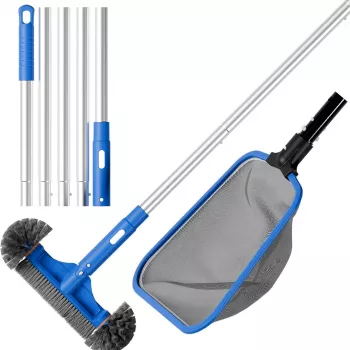
Deluxe Swimming Pool Cleaning Kit with Skimmer Net, Pool Brush & Pole
A simple, repeatable cleaning routine keeps pool water clearer, reduces strain on filtration, and makes weekly maintenance faster. This kit combines the core hand tools used for daily debris removal and wall/floor scrubbing—ideal for staying ahead of leaves, bugs, and buildup between vacuuming and chemical balancing. When you consistently skim and brush, you help your sanitizer work more effectively and keep grime from turning into a tougher, time-consuming problem.
What the kit includes and what each tool is for
Most pool problems don’t start as “big” problems—they start as a little debris on the surface, a faint film at the waterline, or a slick spot on a step where circulation is weaker. The tools in a basic hand kit target those early issues directly.
- Skimmer net: scoops floating debris like leaves, insects, and pollen before it sinks.
- Pool brush: loosens algae film and grime from walls, steps, corners, and the waterline.
- Pole: extends reach to deeper areas and helps maintain consistent pressure while brushing.
- Best use case: quick daily skimming plus 1–2 deeper brush sessions per week.
Tool guide: tasks, best timing, and technique
| Tool | Primary task | When to use | Quick technique tip |
|---|---|---|---|
| Skimmer net | Remove floating debris | Daily or as needed | Skim downwind first; empty the net often to keep it gliding |
| Pool brush | Break up film and early algae | 1–2× weekly (more during heat or heavy use) | Brush from shallow to deep; finish with the waterline ring |
| Pole | Extend reach and leverage | Any time skimming/brushing | Use slow strokes to avoid stirring debris into suspension |
A 10–15 minute weekly routine that works
Keeping maintenance short is mostly about sequence. If you remove what’s floating first and then brush what’s stuck on, your circulation system can capture the loosened particles instead of letting them settle back down.
- Start with skimming: remove surface debris to prevent it from sinking and staining. Work the perimeter first, then zig-zag across the open water if needed.
- Brush next: focus on steps, corners, ladders, and the waterline where buildup starts. Those “quiet” zones often develop film before the rest of the pool.
- Let the filter do the heavy lifting: run circulation after brushing so loosened particles can be captured. This is especially helpful after brushing the waterline or scrubbing steps.
- Empty baskets: check skimmer and pump baskets after heavy debris days to maintain flow. Reduced flow slows down clearing and can make the pool look dull longer.
- Finish with a quick look: note cloudy patches or slippery areas that may need extra brushing, especially near returns and in corners.
For broader healthy swimming guidance—especially when the pool is heavily used—review recommendations from CDC Healthy Swimming.
Where these tools make the biggest difference
- Waterline ring control: brushing prevents oils and sunscreen residue from setting into a stubborn line. A light, frequent scrub beats aggressive scrubbing later.
- Early algae prevention: regular brushing disrupts biofilm so sanitizer can work more effectively. Think of brushing as “breaking the grip” algae tries to form on surfaces.
- After storms or windy days: skimming right away reduces tannins, staining risk, and filter loading. The longer leaves soak, the more they can discolor surfaces.
- High-use periods: frequent surface skimming keeps debris from reaching the bottom between vacuum sessions, making full cleanups faster.
For best practices and safety considerations around pool operation, consult Pool & Hot Tub Alliance (PHTA) Standards and Safety.
Tips for better results with less effort
- Use long, slow strokes: fast brushing can cloud the water by suspending fine particles. Slow pressure lifts film without “powdering” debris into the water.
- Work in sections: complete one wall and its floor area before moving on. This makes it easier to spot missed spots and keeps your path consistent.
- Don’t skip hidden spots: brush behind ladders/rails and along returns where circulation patterns trap debris. These areas often feel slick first.
- Rinse and dry after use: a quick freshwater rinse helps extend tool life and reduces grime transfer the next time you clean.
- Store out of direct sun when possible: UV exposure can shorten the life of plastics and mesh. A shaded hook or storage bin can make a noticeable difference.
Common mistakes to avoid
Product spotlight: Deluxe Swimming Pool Cleaning Kit with Skimmer Net, Pool Brush & Pole
If the goal is quick, consistent upkeep with the tools you’ll actually use, the Deluxe Swimming Pool Cleaning Kit with Skimmer Net, Pool Brush & Pole covers the core routine: skimming for daily debris control and brushing for weekly surface maintenance. It’s a practical starter set for above-ground and in-ground pools that need frequent leaf and bug removal, and it pairs well with regular water testing, balanced chemistry, and consistent filter run time. It’s currently in stock for $45.67 USD.
More in-stock picks
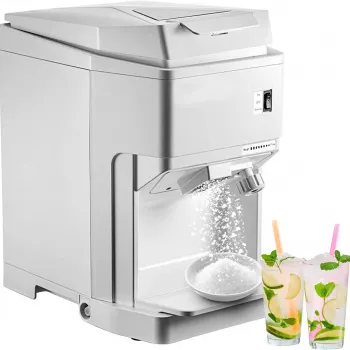
- Electric Ice Shaver Machine 265 lbs/h Snow Cone Crusher for Home & Commercial Use
- Diadora Men’s White and Black Sneakers
- Diadora Women’s Blue Leather Sneakers
FAQ
How often should a pool be skimmed and brushed?
Skim daily or anytime debris blows in, especially after windy weather or storms. Brush 1–2 times per week, and increase frequency during hot weather, heavy pool use, or if you notice slick spots or early algae signs.
Will brushing make the pool look cloudy?
It can look briefly cloudy because brushing lifts fine particles into the water. Run circulation/filtration after brushing and empty baskets if they’re loading up; clarity typically improves as the filter captures what was loosened.
What areas should be brushed first to prevent algae?
Start with corners, steps, behind ladders/rails, and the waterline, then move through the remaining walls and floor. Focus on low-circulation areas and work section-by-section so you don’t miss the spots algae tends to claim first.















Leave a comment